Built on the official school curricula of Ukraine, Poland, and Estonia.
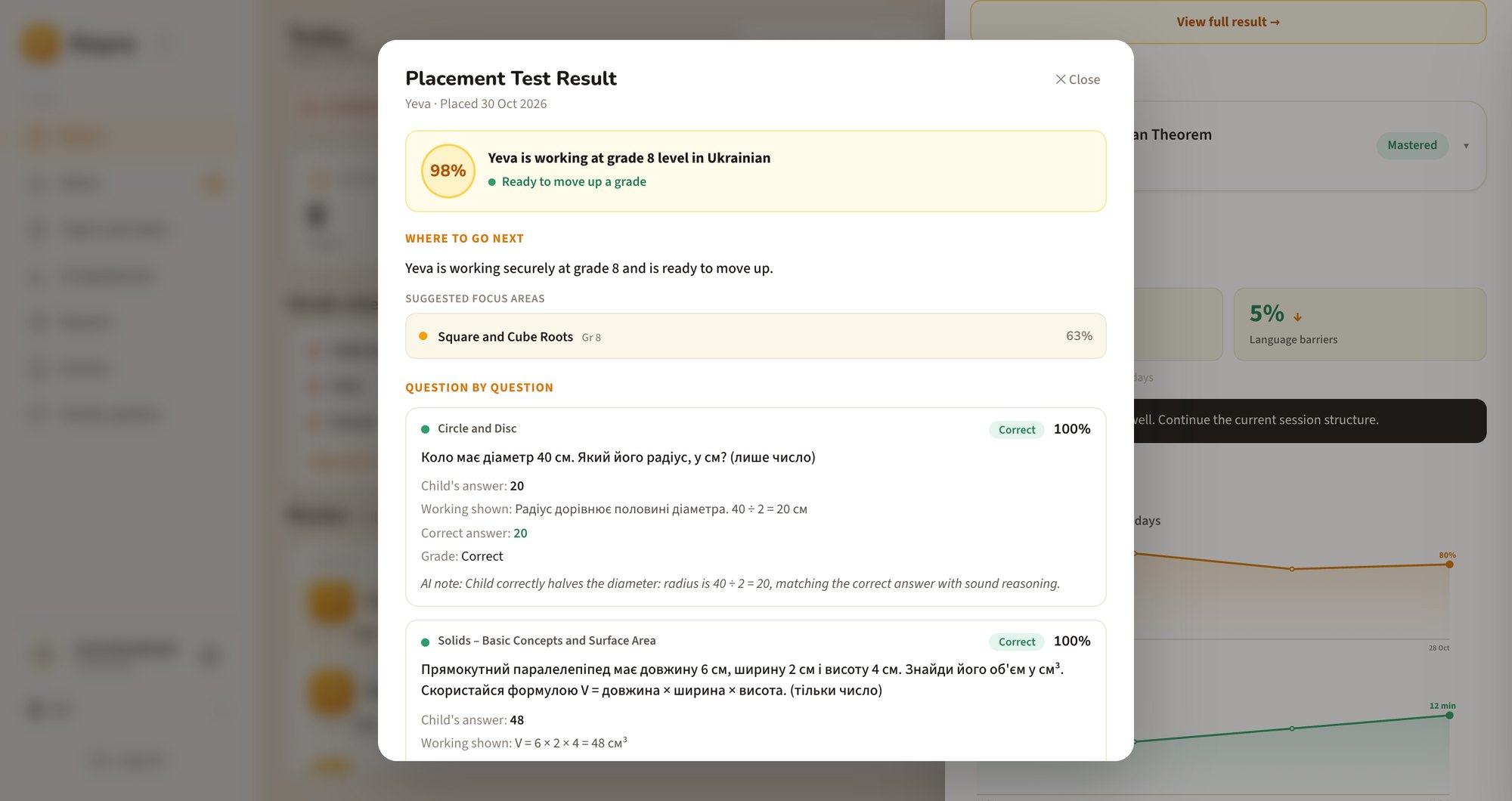
An adaptive, one-on-one AI math tutor for multilingual children in grades 1 to 9. It works out what is holding each child back and decides what to teach next. It starts with a placement, then keeps track of what the child has mastered and where they still struggle, so every session builds on the last.

A child takes a math test in a language they are still learning. The math is the same; the words are new. The test measures language, not knowledge. Capable children are recorded as behind, and the label follows them into a grade, their confidence, and their future.
Interrupted school years leave gaps that a grade cannot see. In every case, a wrong answer has a reason, and today nobody asks which.
Andriy, grade 4. Mastered fractions in Ukrainian. Cannot do them in Polish.
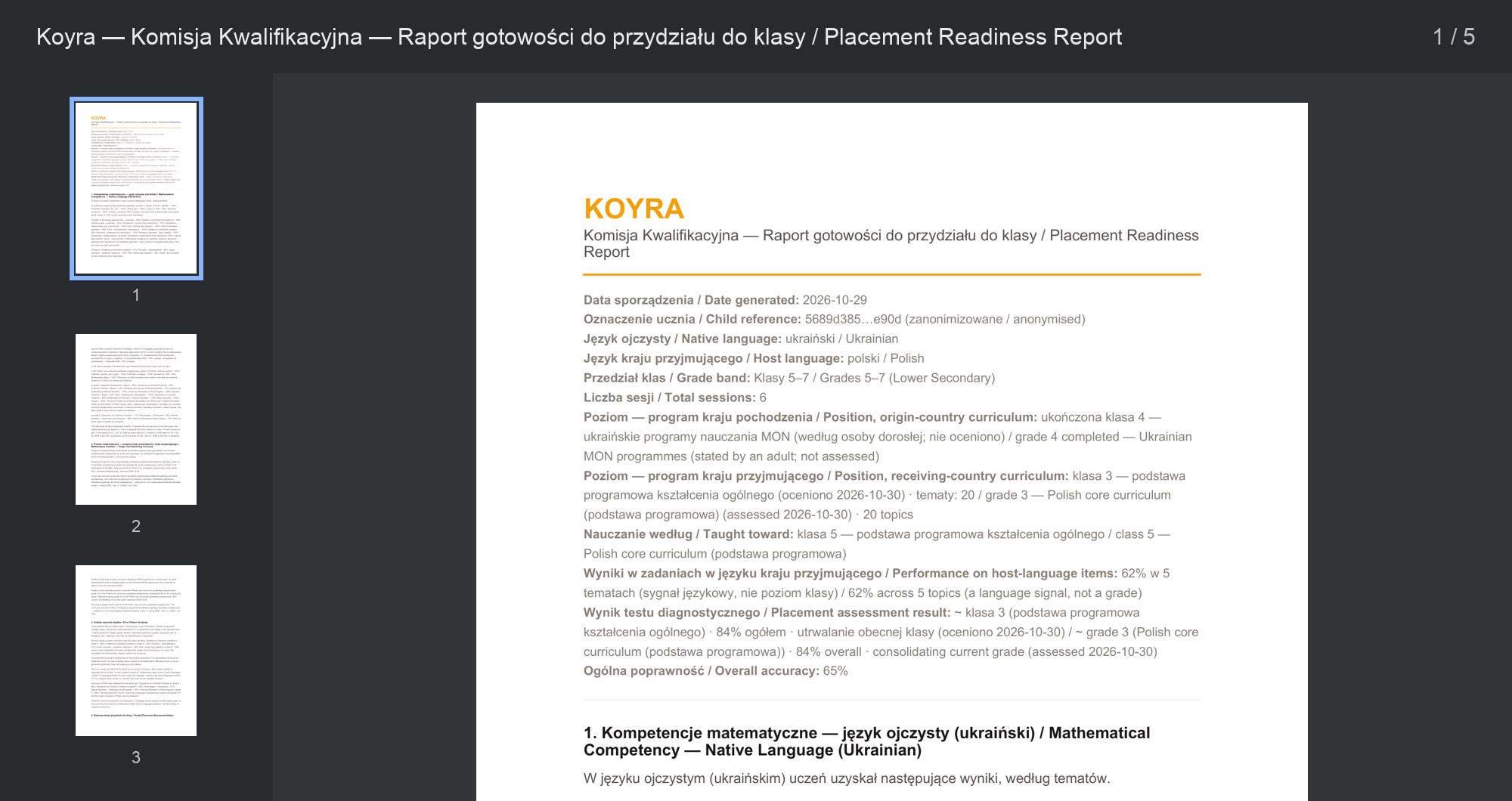
91% on number problems, 38% on word problems. A language barrier, not a math gap.
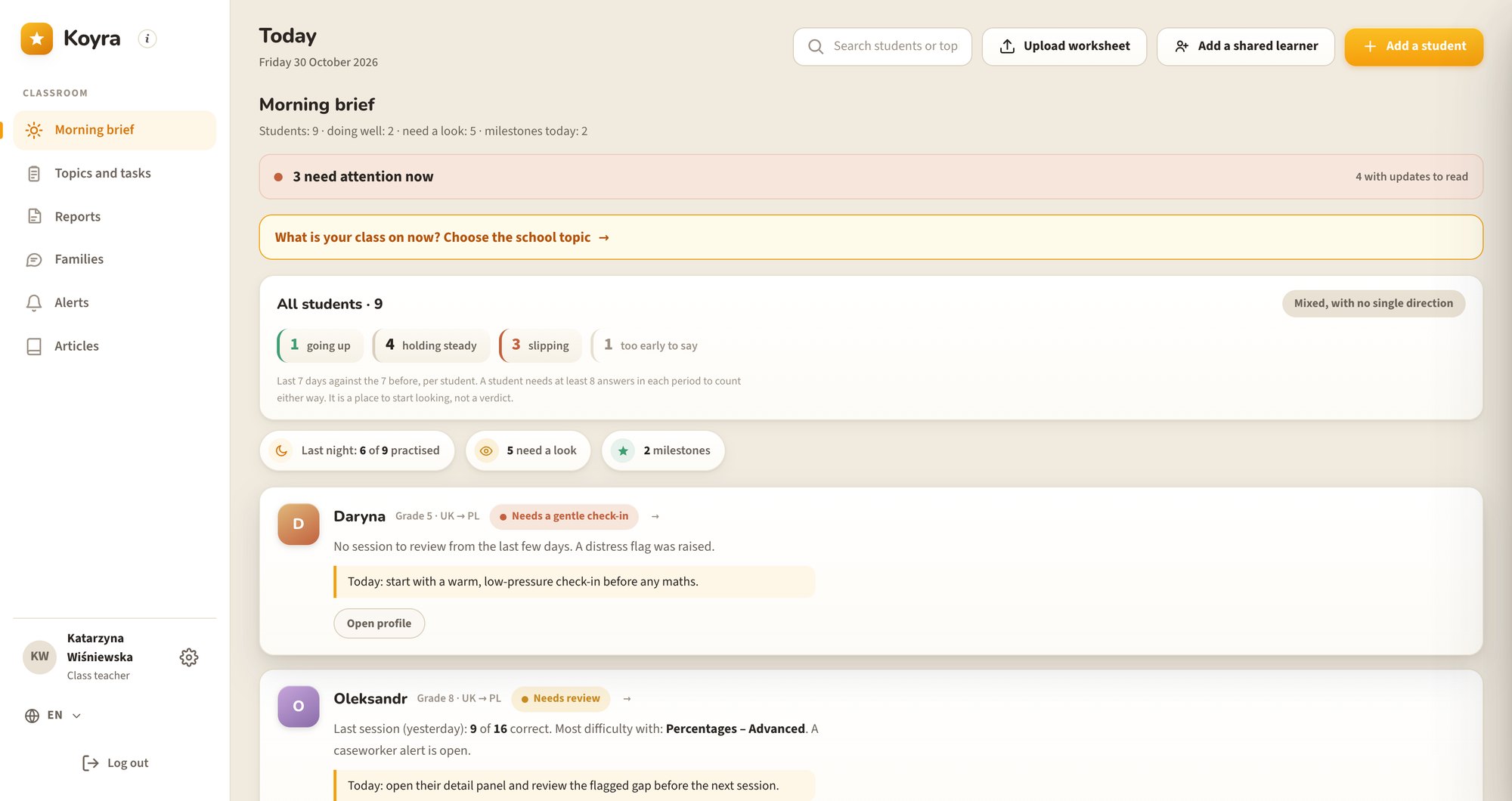
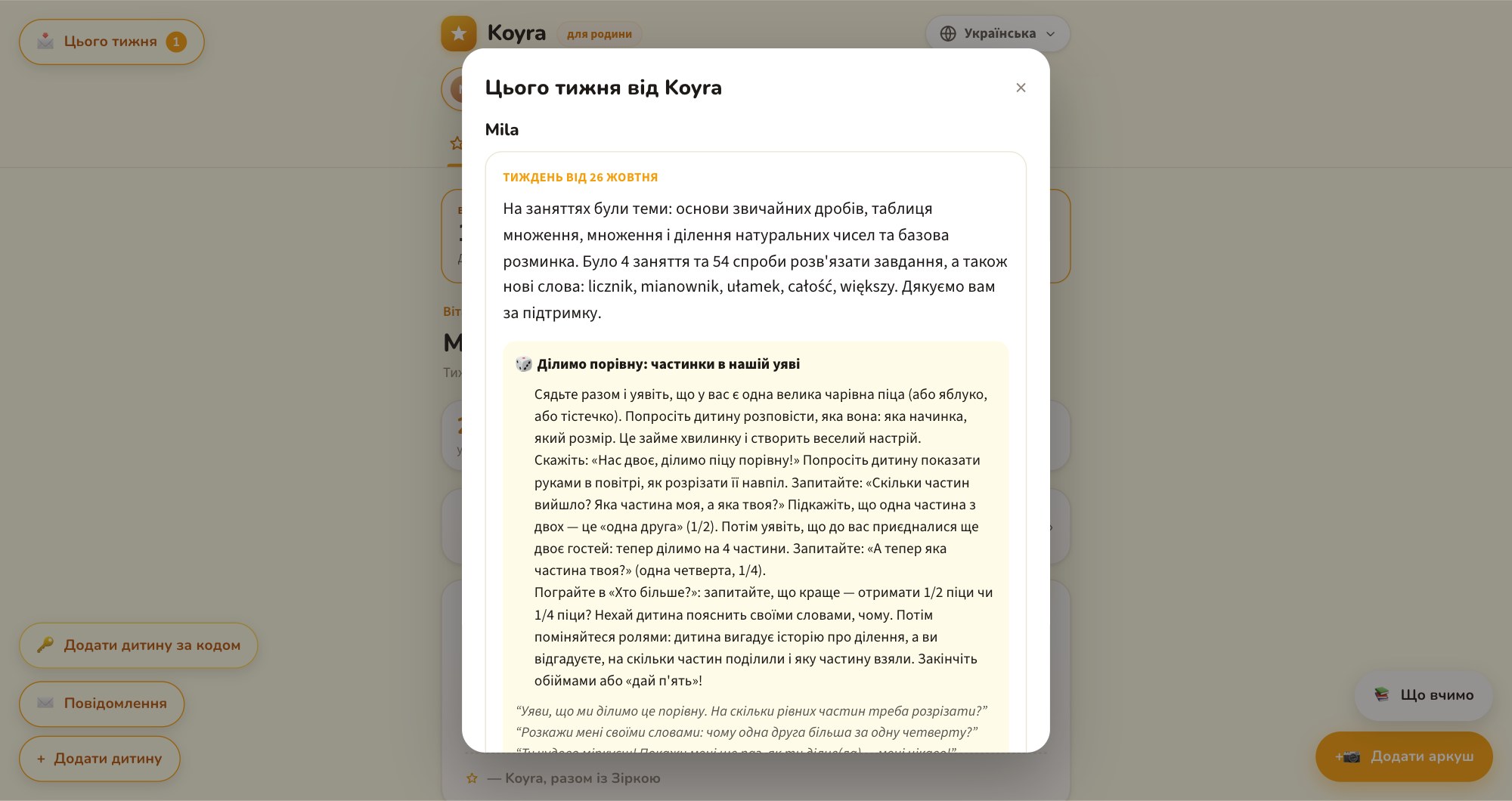
Morning card: explain one word before Thursday's topic on fractions.
The "weak student" disappears. He was never weak.
Illustrative example.
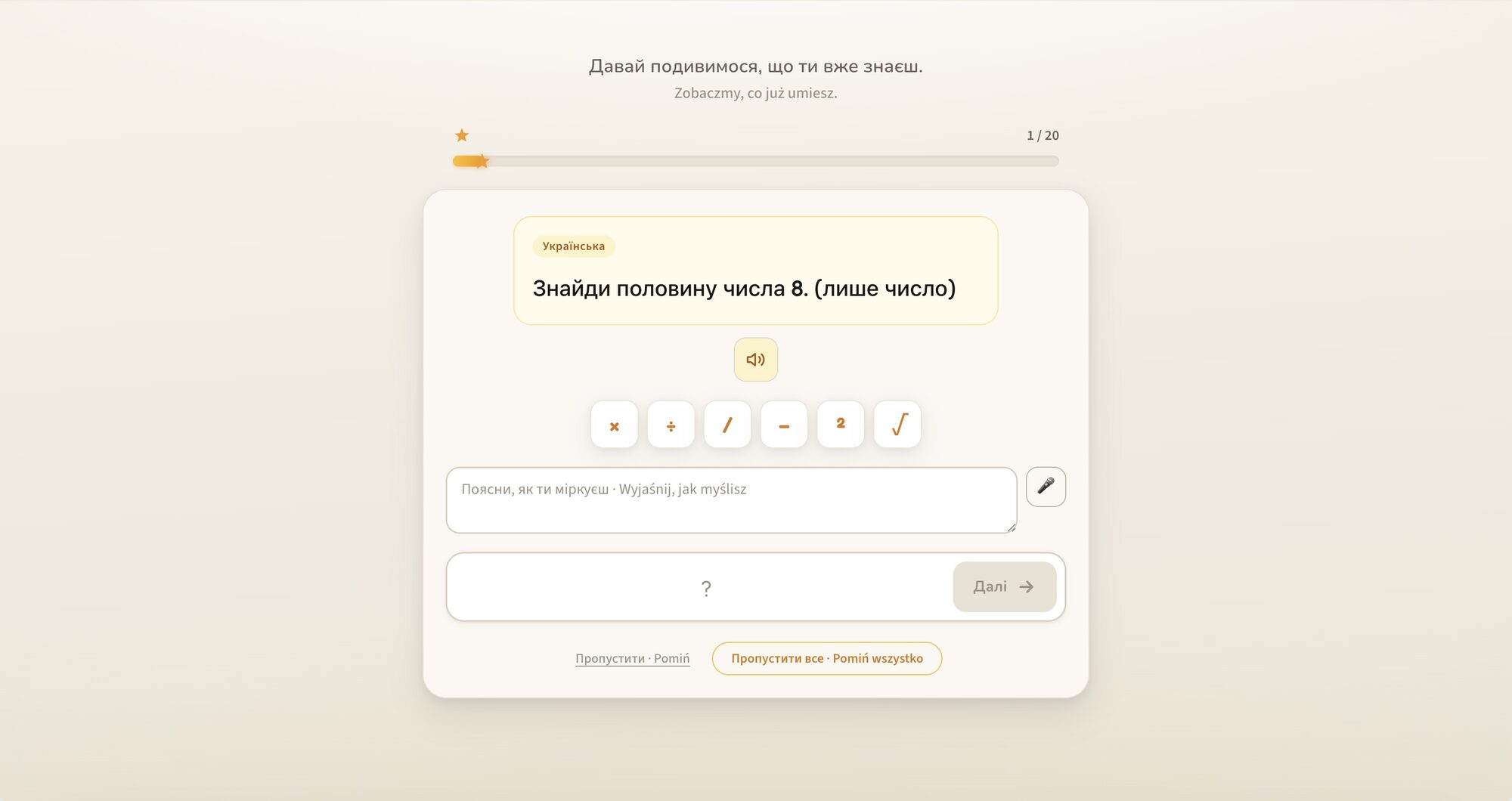
Problems in the child's own language that adapt to their answers. The result is a map of topics, not a score.

Each cause gets a different response, and the adults see which it was.

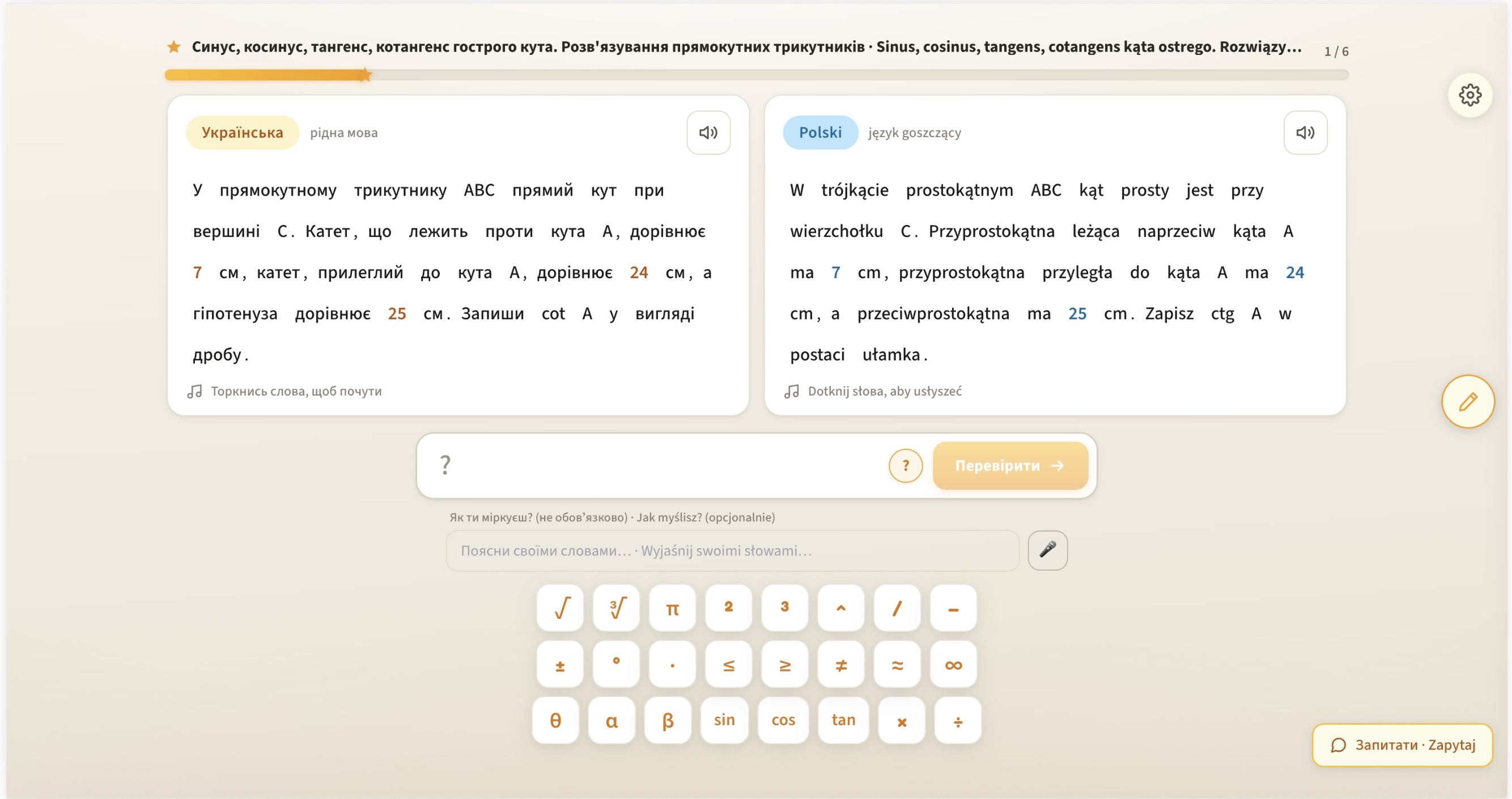
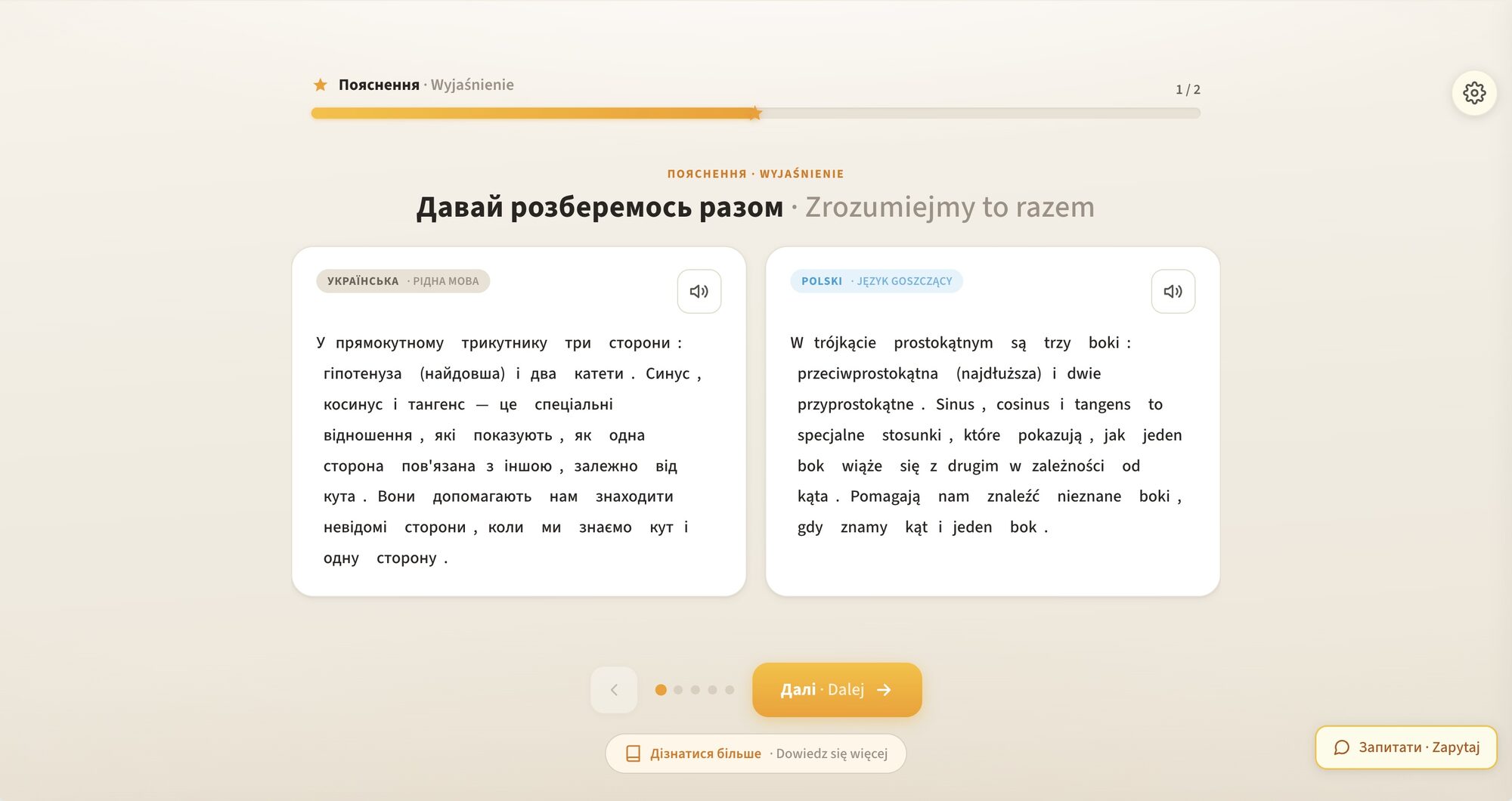
Both languages side by side, a tutor that guides without giving answers, and checks at the end that tell the map what changed.


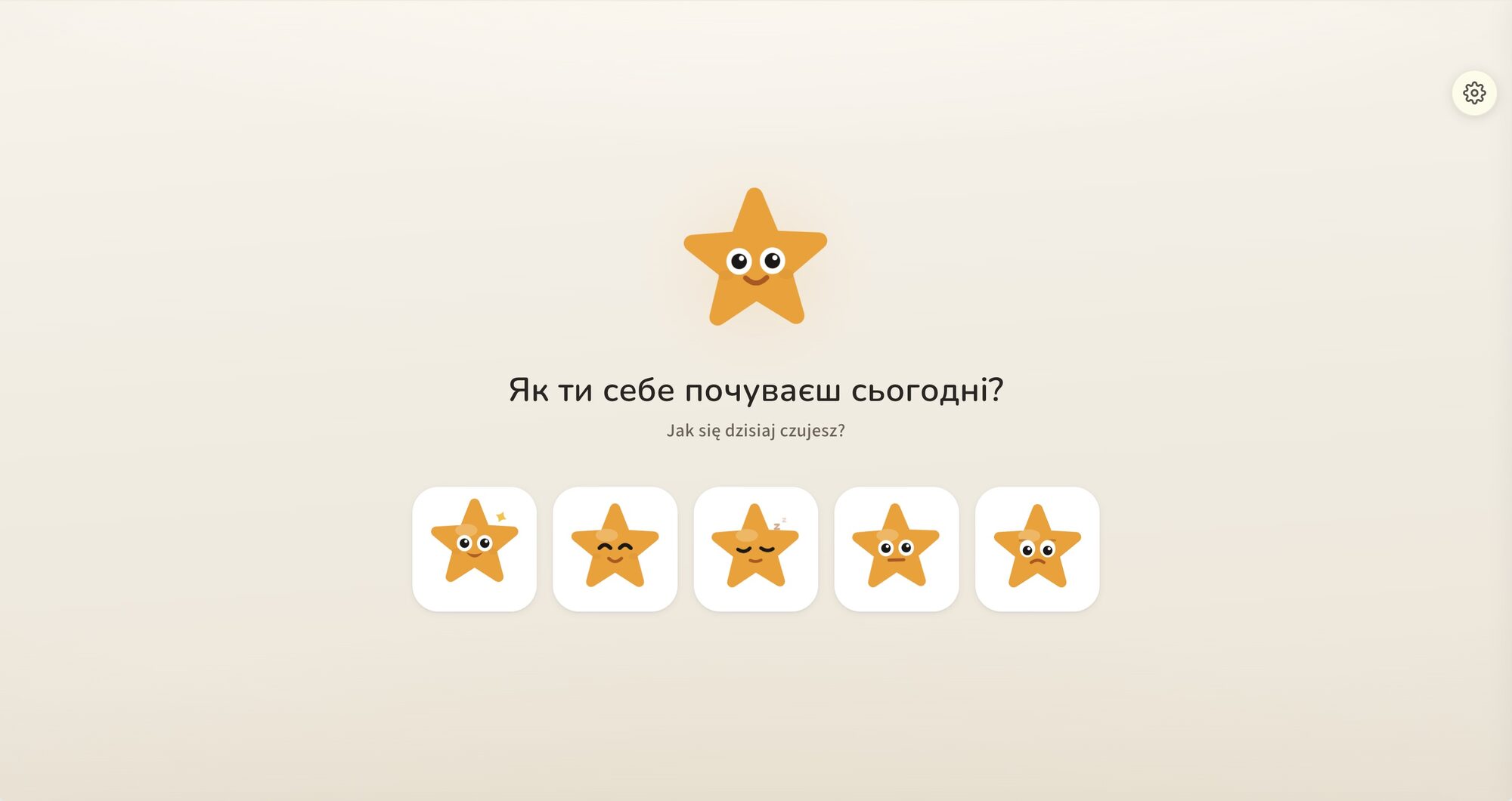
A child never sees "passed" or "failed."
Then another. The child cannot get stuck.
It ends the session early, and stopping never counts against the child.
Built for GDPR compliance from day one. Every child is a code, never a name. Stored data is kept in the EU; AI processing may take place outside the EU.


Koyra was built by Mark Kulman, who grew up in New York in a Ukrainian-Russian household and has tutored Ukrainian children online every week since 2022. The observation behind all of it came from those sessions: children who knew the mathematics and could not show it.
Pilots run in Estonia, Poland, and Ukraine, starting with refugee and displaced children, for whom the gap between what they know and what a test shows is widest. The United States is next.